

Gabriele D’Annunzio Lived a Multi-Faceted Life
By Joseph Scafetta, Jr.
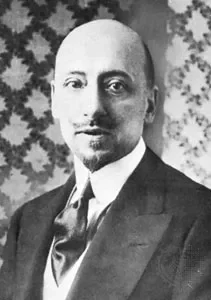
Few people have made a major impact on Italian literature, politics and the popular imagination as Abruzzo’s native son Gabriele D’Annunzio.
Gabriele D'Annunzio was born on March 12, 1863, in the city of Pescara (population: 118,657 in the 2023 Census) which is the capital of a province of the same name in the region of Abruzzo. His father Francesco Paolo was a wealthy landowner. His mother was Luisa de Benedictis. When Gabriele was 16, his first poems were published. At 18, he was admitted to the Sapienza University in Rome. A year later, his second set of poems was published as Canto novo (New Song). When he was 20, he married a Roman noblewoman, Maria Hardouin, on July 28, 1883. They had three sons: Mario in 1884, Gabriellino in 1886, and Ugo in 1887.
His autobiographical novel, Il piacere (The Pleasure), was released in 1889 and introduced the first of his passionate “superman” heroes. Three years later, another such hero appears in L'innocente (The Innocent). In 1894, he became famous when his best known novel, Il trionfo della morte (The Triumph of Death), appeared about an amoral hero. His next major novel, Le vergini delle rocce (The Virgins of the Rocks) was published two years later about a similar compromised hero.
In 1894, he began an affair with the actress, Eleonora Duse, who was five years older than him. As a result, he turned to writing plays for her. The tragedy, La Gioconda, was performed in 1899, and another tragedy, Francesca da Rimini, was performed a year later. He then broke up with Duse and exposed their affair in an erotic novel, Il fuoco (The Fire). His greatest play was La figlia di Iorio (The Daughter of Jorio) which was performed in 1904. It was a poetic drama about the superstitions of Abruzzi peasants. New plays and another novel followed, but they failed to finance his extravagant lifestyle. As a result, he moved to France in 1910.
After World War I started in August 1914, he returned to Italy to urge King Vittorio Emanuele III to join the Allies. When the king did so in May 1915, D'Annunzio volunteered for the fledgling air force at the age of 52. During one aerial combat, he lost an eye. Two of his best known military exploits came against the Austrians in 1918. First, he dropped thousands of propaganda leaflets in a flight over the capital city of Vienna. Then, leading a flotilla of high-speed power boats, he led a daring surprise attack on the Austrian naval fleet.
After the war ended and the Treaty of Versailles was signed in 1919, D'Annunzio and 300 supporters occupied the neutral port city of Fiume, now Rijeka in Croatia. He ruled as a dictator until December 1920 when Italian military forces took over from him. When Fiume became a part of Italy in 1924, the prime minister, Benito Mussolini, awarded him with the title of Prince of Montenevoso.
At 61, he retired to the town of Gardone Riviera in Lombardia and wrote his memoirs. He died there from a cerebral hemorrhage on March 1, 1938, 11 days short of his 75th birthday. After his death, a large mausoleum was constructed to contain his body. His grave has become a monument to Italian nationalism and is still one of the most visited tourist sites in northern Italy.
Sources: (all accessed November 5, 2025)
www.britannica.com/biography/Gabriele-D'Annunzio
en.wikipedia.org/wiki/Maria_Hardouin
en.wikipedia.org/wiki/Eleonora_Duse
Winter 2026