

Opera, Theater, Drama, Classical Music and More in Abruzzo and Molise
By Michael DeMarco, M.A.
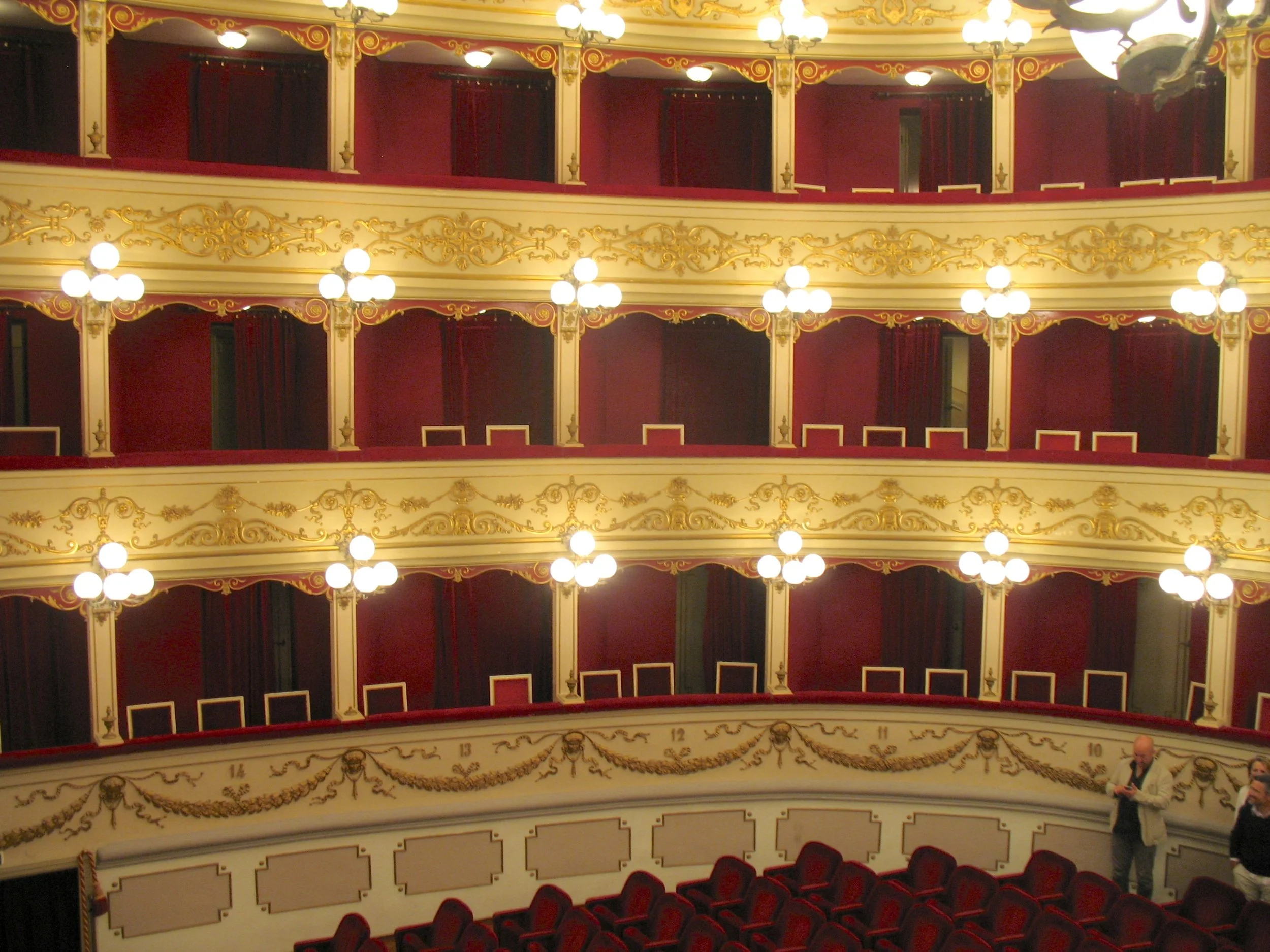
Photo credit: Auditorium of the Teatro Marrucino in Chieti. Photo by Cats' Photos.
Creative Commons Attribution-Share Alike 4.0 International license.
On Sunday mornings while visiting my grandmother, we often sat in the kitchen and listened to the “Italian Hour” broadcasted from a local college radio station. The variety of music was often insightful, such as songs about Italian Unification—Siamo Italiani: We are Italians from the north to the south, from Vesuvio to the Alps.
I liked the tunes that just spread joy and humor, especially songs about about children with accordion accompaniment. How can one not laugh hearing Pippo Franco’s "Mi scappa la pipì, papà" (I have to pee, Daddy!).
Whenever highbrow opera voices from stars such as Renata Tebaldi, Mirella Freni, and Giulietta Simionato hit the airwaves, my grandmother would spurt out: “Che gallina!” She didn’t appreciate the notes reminding her of hens from her childhood days in her home mountain village.
For those who do appreciate high culture, they is no need to travel to La Scala in Milan or the San Carlo Theatre in Naples. There are absolutely stunning opera houses in Abruzzo and Molise, often featuring tops talents of the regions. Details for five regional theaters are given below to consider visiting.
ABRUZZO
1. Teatro Marrucino (Chieti): At the heart of Chieti you’ll find this opera and theatrical house as the gem in the Abruzzo region. Established in 1818, the Marrucino Theater is the oldest in Abruzzo. The horseshoe-shaped auditoriam offers great acoustics for those sitting in tiered boxes. Take time to closely scan the ornate ceiling fresco. There are 502 seats in total.
2. Teatro Comunale Maria Caniglia (Sulmona): The Maria Caniglia Municipal Theatre in Sulmona may have even better acoustics appreciated by those especially seeking a symphonic music venue. Built in the easy 1930s, there are 706 seats, making this architectural beauty the largest in Abruzzo. There is a variety of classical music, opera, and drama for those sitting in the tiered corridor, and boxes.
3. Il Teatro degli Ulivi (Fossacesia): The Olive Tree Theatre is famed for it’s open-air performance space designed to merge agriculture, nature, and the performing arts. It was built utilizing local pine and stone from the Majella mountains. Check their programs, which range include classical music, opera performances, and Italian folk music. The seating is a little rustic, but if regular seats ate occupied, a hay bale is pretty comfortable!
MOLISE
1) Teatro Savoia (Campobasso):
This is the Molise region’s theatrical hot spot for anyone interested in theater. Completed in the 1925 with 438 seats, the horseshoe-shaped auditorium has four tiers of boxes. It is curated by the Molise Cultura Foundation with programs featuring symphonic concerts, ballet, and modern theatrical comedies, and of course, classical opera.
2) Teatro del Loto (Ferrazzano):
A few minutes’ drive south of Campobasso, this modern but cozy theater sits 2,788 feet (cir. 850 meters) above sea level with great panoramic views from its outdoor terraces. Much diversity presented here with a flair that celebrates the culture and traditions of Molise. With less than 150 seats, you’ll find yourself not in a typical classic theatre, but a building of avant-garde design for a unique experience. As the ancestral hometown of Robert DeNiro, Ferrazzano has approximately 3,300 residents.
For further details, check out these theaters’ programs online:
• Teatro Marrucino (Chieti): https://www.teatromarrucino.eu/
• Teatro Comunale Maria Caniglia (Sulmona): https://www.teatromariacaniglia.com/
• Il Teatro degli Ulivi (Fossacesia): https://ilteatrodegliulivi.it/
• Teatro Savoia (Campobasso): https://www.fondazionecultura.eu/teatro-savoia/
• Teatro del Loto (Ferrazzano): https://www.teatrodelloto.it/
Summer 2026