

PASTA – A Food Staple Made in Abruzzo andMolise
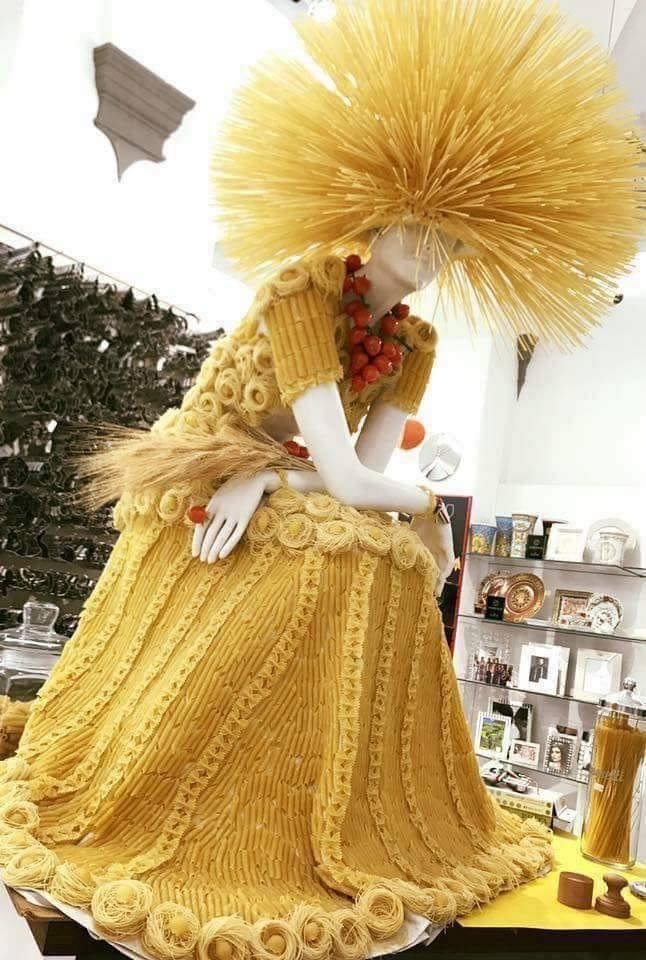
Pasta is even a medium for art in Italy.
By Michael DeMarco
Pasta! What food could be more symbolic of Italian heritage? And why is this so? It is rooted in cucina povera — “poor kitchen” or “peasant cooking.” Pasta has been the staple food, creatively made for life sustenance — simple ingredients turned into nourishing meals where family bonds were forged.
The resilient people of Abruzzo and Molise mixed local ingredients into their own regional identity. Today there are famous pasta brands bringing pride to the area while making a comfort food enjoyed at tables in far off countries with shared ancestral memories.
Durum wheat semolina is the key ingredient. It is, of course, golden flour made from grinding a very hard, high-protein wheat variety. This wheat is hard, duro. Semolina are the hard gritty grains left after the milling of flour. Of great importance here—if you care for your own health—is that modern processing removes most of the nutrients, while the ancient tradition keeps the vital substances, through labor-intensive, more costly methods. It’s worth it for health and taste. Old mills dot the landscape in Abruzzo and Molise villages with many being renovated for functional production or as educational museums.
Today, Molise has several artisanal producers with skills for creating pasta in small batches using traditional manual methods, rather than automated industrial processes. Their goal is to provide a high-quality product. They utilize local wheat and traditional bronze-die extrusion for a rustic texture. In this method, dough is forced through porous bronze molds, resulting in a rough, textured surface. Some producers use gold dies! Pasta made the old way holds sauces better than modern dies, such as those that are smooth and Teflon-coated dies.
Four of the well-known artisanal producers in Molise and their locations are: Pasta Frentana (Malfada, CB), Spighe Molisane (Cercemaggiore, CB), Pastificio Camp 'Oro (Sant’Elia a Pianisi, CB), and Pasta Testa (Cercemaggiore, CB). However, the largest produce in the region is La Molisana, based in Campobasso. It was established in 1912 using its own mills and the traditional methods of production: pasta made from 100 percent Italian durum wheat, using bronze dies for texture, and exporting globally.
The larger region of Abruzzo has more pasta companies than Molise with seven standing out for their quality. One of the oldest pasta makers in Italy was founded in 1867. It is Pastificio Masciarelli, based in Pratola Peligna. Rustichella d’Abruzzo is another artisanal producer located in Penne. They specialize in traditional shapes and use mountain spring water and long drying times to preserve the grain’s nutritional value.
Notice that these pasta companies use local ingredients and water that offer special qualities. A produce company manager gave an example, stating: “You can’t make a Napolitana pizza except in Naples.” Why? Because the ingredients such as tomatoes are locally grown and reflect the soil, weather, and methods of production. Olive oil made in the area has a different taste compared with other oils from elsewhere. The same rationale applies to products from Abruzzo and Molise.
Another artisanal company is Pastificio Cocco (Fara San Martino) that still uses 19th-century machinery for some processes. Gourmet chefs favor their pasta for its rough texture and superior sauce-holding capabilities.
Located in Roseto degli Abruzzi, Pastificio Verrigni is one using gold dies in addition to traditional bronze. Based in Miglianico, Zaccagni uses spring water from the Majella mountains. Delverde, based in Fara San Martino, uses of spring water from the Verde River. The title of largest pasta producer in Abruzzo goes to De Cecco. Founded in 1886 in Fara San Martino, it is one of the most famous pasta brands in the world.
When you’re slurping in a long spaghetti noodle, think of the nutritious durum flour being milled with bronze or gold dies, mixed with mountain and river waters, and dried just for your table. Abruzzo and Molise are providing food for the soul, and its pasta makers provide employment for many in the region. Pasta shapes, as fusilli, cozzarelli, or farfalle, can symbolize fertility, prosperity and the circular nature of life. Salute to us and Abruzzo and Molise!
For more on modern pasta making, check out this video:
https://www.youtube.com/watch?v=XM0zVSexEiA
Michael DeMarco, M.A., has written three books dealing with Abruzzo and Molise: a biographical novella (To Give to the Light), an illustrated children’s book (Pentro: Horses of the Spoon-Shaped Valley) and a scholarly work (Mundunur), with separate editions in English and Italian.
.
Spring 2026